Content
“ECN” stands for “electronic communications network” and “STP” stands for “straight through processing”. ECN brokers execute by matching client orders and STP brokers execute by passing client orders directly to an external liquidity provider. While understanding the difference between ECN vs. STP brokers is important, it’s just one aspect of becoming a successful trader. Continuous learning, practicing proper risk management, and developing a solid trading strategy are equally crucial elements in your forex trading journey. ECN brokers are often preferred by experienced traders who value transparency, tighter spreads, and direct Blockchain market access.
- Dealing desk spreads are often fixed, which can appear attractive if they are quoting a fixed spread of, for example, one pip on EUR/USD.
- Therefore, a majority of traders tend to lose money with market makers.
- Traders buy and sell directly to each other without any intermediaries.
- Using an ECN or DMA and STP hybrid model generally allows a broker to lower their costs somewhat after system development completion which means they can offer a discounted deal execution service.
- As mentioned above, they profit from charging a commission, thus the trader’s success will always be at the forefront.
Understanding the Differences Between STP and ECN Forex Brokers
A hybrid model is when both ECN and STP models are fused together in order to create a better deal for both the broker and the client. They can use characteristics from ECN and STP to automate trades, change spreads and commissions, and work with different markets. An ECN broker will consolidate their prices after comparing stp trading costs from several market providers in order to offer the lowest spread.
Does An STP Account Guarantee No Intervention From A Broker?
STP brokers also offer quick execution, but because orders are routed through liquidity providers, there might be a slight delay compared to ECN execution. Both ECN and STP brokers offer fast execution speeds, but there can be slight differences. The matter of sufficient https://www.xcritical.com/ liquidity is a constantly present issue in the field of Forex. Liquidity dictates and affects practically every facet of the Forex market, determining whether the industry is active and thriving at any given moment. The same is true for individual Forex brokers and their respective partnerships with liquidity providers.
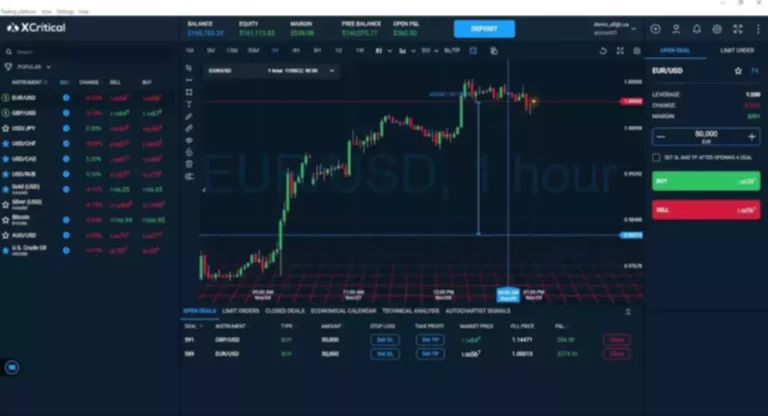
What’s the difference between ECN and STP?
This means that traders have access to the best possible prices at any given time. ECN brokers earn their income by charging a small commission on each trade. Looking closer at ECN brokers we can see that they provide for all of the participants in the network like major brokers, individual traders, and liquidity providers to trade against the other to get the orders. This creates not only a high liquidity environment with the best spreads but also ensures your orders are executed almost instantly in most cases. They do not however provide for micro lot trading, aiming more at higher volumes in most cases. Traders benefit from an STP model through its deep liquidity pooled from a multitude of liquidity providers.
Once you know what your goals as a trader are, it is important to understand the types of brokers and what each of these has to offer. The first thing you should look at is the type of network they offer. Traders get raw spreads from 0.0 pips for a $7.00 commission per 1.0 round lot for a $1,000 deposit. Trade Nation has MT4, the leading algorithmic trading platform, and maintains a balanced asset selection featuring liquid trading instruments. The Standard account has no minimum deposit requirement with commission-free spreads from 0.8 pips or $7.00 per 1.0 round lot.
STP Forex brokers promise to offer a highly transparent trading environment that is devoid of any conflict of interest with its clients. An ECN broker is connected electronically by means of a network to international banks and other liquidity providers. If the forex traders trade via an ECN platform, it can be said that they are connected to the international currency market and are trading in real time. STP indicates that from placement of orders to closing the deals, everything is accomplished automatically without any kind of manual intervention. When it comes to forex trading, choosing the right broker can significantly impact your trading experience.
LQDFX is listed on Going offshore to escape the CFTC as an STP/ECN broker. A TRUE ECN/STP will charge or credit swaps and charge a small commission. I’ve read around that spreads are thinner with ECN but I have not seen it personally. I’ve noticed that spreads (on Indicies anyway) seem to be about the same – .50 for SP500.
However, it comes with its drawbacks – a hybrid approach can still present system failure errors, programming loss, and security breaches. Nonetheless, by incorporating this type of service, brokers can focus on providing a first-class trading experience. This popular mix also allows the broker to fully automate the order entry, the trade execution aspects, and dealing with spread pricing.
A further advantage is that ECN brokers also allow traders to deal on spreads that can be substantially tighter than that quoted by a single market maker. Some brokers that use the ECN model charge a flat execution fee on a per-trade basis as a commission, which is of benefit to those who usually trade larger amounts but less frequently. Alternatively, there are some ECN brokers who widen the trading spread so that their client can deal on and charge fees in proportion to the amount dealt on each trade. This kind of ECN broker may be better suited to traders who have a preference for trading frequently but in smaller amounts. DMA Forex Broker ModelForex brokers sometimes use a Direct Market Access (DMA) model to execute their clients’ transactions. This automated service works by matching client orders with dealing prices offered by market makers or other leading liquidity providers.
STP brokers act as intermediaries between traders and liquidity providers. When a trader places an order, the STP broker routes it directly to a liquidity provider, which can be a bank or another broker. The liquidity provider then executes the trade on behalf of the trader.
A bigger problem arises when we ask what qualifies as a “liquidity provider”? If it is just another dealing desk, then how can it be a “true” ECN offering? To be regarded as a real ECN broker, the liquidity provider should really be a tier 1 bank.

When a trader places an order with an STP broker, the broker will pass the order to the liquidity provider offering the best price. ECN brokers make their money by charging a small commission on each trade instead of widening the spread. This commission-based model ensures that the broker has no conflict of interest with the traders and that they are incentivized to provide the best possible trading conditions. As a result, ECN brokers typically offer spreads that are close to the actual market spread, often starting from as low as 0 pips. ECN stands for Electronic Communication Network, and ECN brokers provide a direct connection between traders and the interbank market.

What this means is since the broker wins when you lose, it is not in their best interest for you to win. Get funded with fair conditions, manage real funds with the help of top technology, and fulfill your financial goals. Filippo Ucchino created InvestinGoal, a comparison site and educational portal for the online trading and investing industry. Through InvestinGoal, Ucchino helps users navigate the world of online investing and trading by providing trading guides, best brokers rankings, broker reviews, and broker comparisons. Filippo Ucchino is the founder and CEO of the brand InvestinGoal and the owning company 2FC Financial Srl.
Such a model allows traders not to worry about their investments, as the broker does not take any particular interest in the personal finances of its clients. For their contributions, Forex brokers earn their profits with transaction fees and differences between bid and ask prices. The difference between bid and ask prices presented by forex brokers is called the spread.
With true ECN/STP brokers, traders can use scalping techniques and robots to close their positions. False ECN/STP brokers do not allow traders to use the scalping technique as they are disadvantaged when traders make small profits. With an ECN/STP broker you will get to see the depth of market and liquidity information. This can be crucial to your timing, particularly if you are a manual trader, who will weigh up the trading opportunity versus the level of activity in the market, before placing the trade. For help making your choice, we have created a guide of best forex brokers you can take a look at.

Leave a Reply